

Wedbush Celebrates Black History Month with “Being Black in Corporate America – The Conversation” Event

On February 25, 2021, Wedbush proudly hosted “Being Black in Corporate America – The Conversation” in honor of Black History Month. The inspiring event provided an inclusive platform where Wedbush colleagues were able to listen and learn from other experiences similar and different from their own. Terretta Lusk, Corporate Receptionist, emceed the event, and began with a memorial and moment of silence for our late colleague, Ms. Carolyn Hills. Ms. Hills, Manager CSD DVP/Prime Broker for Advanced Clearing and Prime Services, left an impact at Wedbush with over 16 years of service at our firm. Next, Gary Wedbush, President of Wedbush Securities, provided opening remarks, highlighting what diversity means to Wedbush: “Black professionals [at Wedbush] make our firm smarter and more capable…Having a diversity of backgrounds, outlooks, viewpoints, and thoughts makes our firm stronger.” The highlight of the event was the informative conversation led by certified coach, Jeanette Charles. The panel of speakers featured nine distinguished Wedbush colleagues, including Carmen Davis-Dye (Operations Manager, IFON), Shivan Somaratne (Investment Associate), Terretta Lusk (Corporate Receptionist), Anthony Lee (VP, Investments), Ryan Hopkins (Senior Legal Assistant), Jonathan Jones (SVP, CTO), Adriana Robles (Analyst, Vendor Management), Landon Waring (Helpdesk Technician), and Christine Hall (Executive Assistant). The panel shared stories and discussed several pertinent topics including: What challenges people of color face in corporate America Growth opportunities for Wedbush How to be more inclusive How we hold our organization, colleagues, and community accountable In addition to the enlightening conversation with our panelists, WedbushCares donated $2,500 for one of the event’s earmarked charities, Brotherhood Crusade. “The Brotherhood Crusade helps improve the quality of life for underserved communities through various ways,” said Christine Hall, “including promotion of health and wellness, academic success, and personal advancement.” WedbushCares also donated $2,500 to a second charity, The Hidden Genius Project, who train and mentor black youth in technology and helps them work on their entrepreneurship and leadership skills. Wedbush would like to thank all of our colleagues for sharing their stories. This discussion was a fantastic start and will be part of Wedbush’s ongoing efforts to ensure a diverse and inclusive workplace. For more information, and to donate, please visit WedbushCares, The Brotherhood Crusade, and The Hidden Genius Project.
Emerging Trend: Special Purpose Acquisition Companies

SPACs are one of the hottest trends on Wall Street. SPACs are becoming an alternative to the more traditional initial public offering or IPO for some companies as a way to raise capital in the equity markets. While SPACs are not new, their popularity has skyrocketed over the past year or so. What is a SPAC? SPAC is an acronym for special purpose acquisition company. A SPAC is a shell company whose only purpose is to raise funds to be used to fund a private company that is looking to go public via an acquisition. SPACs are often called “blank check companies” as they have no underlying purpose other than acquiring the privately held company. How are They Used? SPACs are often launched by prominent investors or a group of investors for the purpose of raising money to acquire the target company and ultimately take it public. As a blank check company, the SPAC is essentially a holding vehicle for the shares of the company the founders of the SPAC are looking to take public. SPACs are often used in lieu of the more traditional initial public offering route that was the prevalent means for a company to go public in the past. How Investors can get Involved Investing in a SPAC is just like investing in shares of a stock that is publicly traded on any stock exchange. An investor would simply go to their brokerage account or work through their financial advisor to buy shares in the SPAC. As with any stock you are considering, you will want to do your homework and understand the underlying investments made by the SPAC to see if this is an appropriate holding for your portfolio. You will want to pay particular attention to any IPO prospectus and to any periodic reports the SPAC files with the SEC. There will also be a decision to be made when the underlying company that the SPAC has invested in goes public. Do you want your share of the underlying trust fund the SPAC founders created, or do you want to remain as a shareholder of the newly public operating company? Another angle that investors can consider is investing in a SPAC ETF. There are several ETFs that have launched in recent years that invest in SPACs. This approach can help investors interested in this segment to diversify their risk away from holding one of two individual SPACs. As with any ETF or pooled investment, you will want to understand how the ETF is managed. For example, does the fund track some sort of index or benchmark? Is the fund market-cap weighted? What are the underlying expenses? Recent Performance and Case Studies of Completed Mergers or IPOs Through Blank Check SPACs Recently, Renaissance Capital reported that 16 SPACs raised over $3.4 billion within a week according to TechCrunch.1 Some high-profile SPACs have recorded big gains so far in 2021, including Churchill which was up over 470% before it declined after announcing a proposed merger with electric vehicle startup Lucid Motors. Some top-performing SPACS of 2020 included: Live Oak Acquisition Corp up 171% since they announced a business combination with Danimer Scientific, a biopolymer manufacturer in May of 2020. The SPAC was founded by a veteran private equity investor and a veteran of the investment banking sector. Kensington Capital Acquisition was started to purchase an automotive sector company. After their IPO in June of 2020 the company entered into a deal with next-gen battery maker Quantumscape in September of 2020. Kensington’s shares gained 162% since then through the end of 2020. While SPACs seemingly dominate the headlines in the popular financial media, not everyone paints an optimistic picture. A study by the Harvard Law School Forum on Corporate Governance painted a more sobering picture.2 They studied 47 SPACs that merged between January of 2019 and June of 2020. A few of their findings included: Many SPACs issue shares initially valued at $10. The median SPAC’s cash after their merger was equivalent to $6.67 per share. While SPACs are a cheap way to go public, they found that this is in part because SPAC investors tend to bear much of this cost. Many SPACs with high-quality sponsors tend to do better than others, overall they found that post-merger share prices dropped by one-third or more. Summary SPACs are a hot trend for companies that are looking to raise capital. Many SPACs are formed by experienced investors in the investment banking and private equity space. Like many trends on Wall Street, it will be interesting to see if this one is here to stay or if SPACs are a passing fad. Connect with a Wedbush Advisor for answers to your questions about SPACs. Looking to build a financial plan based on your goals while considering market trends and risk factors? Click here to check out our approach to Wealth Management. Sources Tech Crunch, Verizon Media, February 20, 2021, click to access source Harvard Law School Forum on Corporate Governance, Harvard University, November 19, 2020, click to access source Disclosure These materials are provided for general information and educational purposes based upon publicly available information from sources believed to be reliable — we cannot assure the accuracy or completeness of these materials. The information presented is not intended to constitute an investment recommendation for, or advice to, any specific person. The information presented here is not specific to any individual’s personal circumstances. To the extent that this material concerns tax matters, it is not intended or written to be used, and cannot be used, by a taxpayer for the purpose of avoiding penalties that may be imposed by law. Each taxpayer should seek independent advice from a tax professional based on his or her individual circumstances. The information in these materials may change at any time and without notice.
Understanding Policy: Stimulus Deep Dive

One of the major initiatives for the Biden administration is the passage of a new stimulus package. The goal is to help individuals and businesses impacted by the economic fallout of the COVID pandemic and to stimulate economic growth. Here is a look at the stimulus packages that have been passed so far and at the pending Biden stimulus package. What’s Been Passed and Distributed so Far? There have been two rounds of stimulus payments to individuals thus far. The first round of stimulus payments, passed under the CARES Act, sent stimulus checks of $1,200 to individuals, $2,400 to married couples and $500 to parents for each child under the age of 17. The income phaseout started at $75,000 for individuals and totally phased out at $99,000. These levels were doubled for married couples. Distribution of the checks began in early April of 2020. The second round of stimulus checks went out in January of this year. These checks were smaller at $600 for individuals and $1,200 for married couples. Other stimulus and COVID relief measures passed and implemented so far include: Payments on student loans have been suspended until September 30, 2021. Most federal student loan borrowers are automatically eligible for forbearance. Interest payments are automatically waived on federal student loans and collection activities on most delinquent loans have been suspended. Paycheck Protection Program (PPP) loans for businesses were part of the original CARES Act package. The second round of these loans were limited to businesses with 300 or fewer employees. There is a forgiveness program for these loans that is still being finalized. Other features of the initial stimulus packages included: Increased unemployment benefits that included gig workers and the self-employed Protections against foreclosures and evictions What to Expect from Upcoming Stimulus President Biden appears to be focusing on a stimulus package that offers both economic relief to individual Americans who have been hurt by the pandemic, as well as providing economic stimulus to get the economy moving again. Overview of the Biden $1.9 Trillion Plan There are a number of items in President Biden’s $1.9 trillion stimulus package that are still working their way through Congress at this writing. Here are a few items contained in this proposed package: Stimulus checks in the amount of $1,400 per person for those eligible. This would bring those $600 payments up to a total of $2,000 per person. An increase in federal unemployment from $300 per week to $400 per week. Rental assistance for low and moderate income households and an extension of the federal eviction moratorium through September 30. A 15% increase in federal food stamp assistance that is extended through September 30. Additional assistance to childcare providers and an extension of the child tax credit for an additional year. A new grant program separate from the PPP loan program to assist small businesses. Potential Inflation from Stimulus Packages There are mixed views among experts as to whether continued economic stimulus programs will result in increased inflation. Many experts think this will not be the case as demand for many products and services remains weak in the wake of the economic fallout from the pandemic. The prior rounds of stimulus checks helped a number of people purchase essential goods and services, but they did not cause a general spike in demand and did not result in any significant inflation. An area where some experts do point to inflation from stimulus programs is in asset prices. Some industry experts point to optimism due to the impact of stimulus checks on consumer spending as a contributor to gains in the stock market in the second half of 2020 and so far in 2021. Another asset that is experiencing inflation is housing. This is due to high demand and low supply in many areas of the country. The stimulus programs may have also contributed to housing price inflation as well. With both the stock market and the housing boom in some areas, it remains to be seen if this asset inflation will continue once life gets back to normal after the pandemic is under control. The Future – Janet Yellen Perhaps the president’s most key cabinet appointment is former Fed Chair Janet Yellen as Treasury Secretary. Ms. Yellen recently commented that she hopes the stimulus package is large so as to promote economic growth. Secretary Yellen has a vast resume in economics and public service. Unlike the prior Treasury Secretary, she deeply understands the relationship between government actions and the economy and is in a good position to advise President Biden in this area. Summary The economic impact of the COVID pandemic on many individuals and businesses has been devastating. The stimulus packages passed to date, plus the Biden stimulus package have been designed to help these individuals and businesses, while providing a boost to the economy. The long-term impact in terms of asset inflation and in other areas remains to be seen. Connect with a Wedbush Advisor for answers to your questions about the impact of stimulus packages on the economy. Looking to build a financial plan based on your goals while considering market trends and risk factors? Click here to check out our approach to Wealth Management. Disclosure These materials are provided for general information and educational purposes based upon publicly available information from sources believed to be reliable — we cannot assure the accuracy or completeness of these materials. The information presented is not intended to constitute an investment recommendation for, or advice to, any specific person. The information presented here is not specific to any individual’s personal circumstances. To the extent that this material concerns tax matters, it is not intended or written to be used, and cannot be used, by a taxpayer for the purpose of avoiding penalties that may be imposed by law. Each taxpayer should seek independent advice from a tax professional based on his or her individual circumstances. The information in these materials may change at any time and without notice.
Demystifying Crypto: Understanding the Long-Term Impact
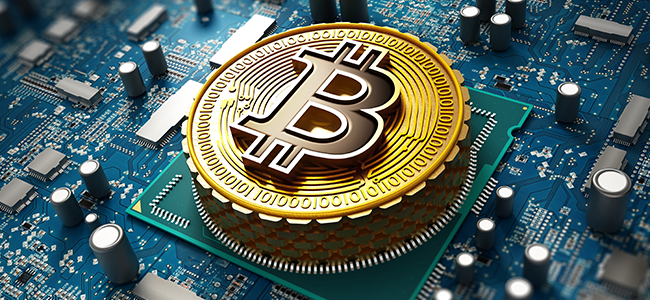
Crypto currencies, of which Bitcoin is the best known, allow individuals and businesses to buy goods and services digitally. These currencies can also be traded as an investment vehicle. Understanding the Recent Crypto Market Trends Bitcoin has made headlines in recent weeks, and at one point in mid-February the digital currency had gained almost 200% over a trailing three-month period. Three other versions of cryptocurrency recorded even larger gains over this period with Dogecoin leading the way with a gain in excess of 2,300%. The total market value of all investable crypto tokens reached a mid-February level that was almost double the previous market peak level in early 2018. Also of significance, Bitcoin has increased its level of adoption as a mainstream payment method. Both Tesla Motors and Mastercard have moved to adopt Bitcoin as an acceptable payment method recently. What is Crypto and What are its Applications? Cryptocurrency is a digital currency which is not associated with a specific country or state. Crypto works using blockchain technology. Blockchain manages and records crypto transactions, creating an online ledger. Bitcoin is the most prominent type of cryptocurrency, but there are over 6,700 different cryptocurrencies traded. Currently Bitcoin accounts for 55% – 60% of the total valuation of all cryptocurrencies. Crypto has a number of applications as a payment option and for other transactions. The blockchain technology aspect of the process can provide a transaction record that has a number of applications. It could be used to track payments or in the case of loan, it could be used as an ongoing record of the loan’s funding and the borrower’s repayments. The potential applications are virtually endless. Cryptocurrencies are currently used as an alternative investment vehicle by many investors. Bitcoin’s value especially has been volatile in recent weeks. Note that one aspect of using crypto is the need for secure storage, there have been stories of lost drives resulting in crypto holders losing access to their holdings of the digital currency. What Uses Will Crypto Have in the Future? There are many potential future uses of cryptocurrencies in terms of payment for some types of purchases, transferring funds between parties for things such as loans or a major business transaction and a host of others. In order for cryptocurrencies to become a more mainstream payment method, there are some issues to deal with. One is to ensure that there is sufficient security on the crypto vehicle. Currently there is a risk of fraud or hacking, this would need to be eliminated or greatly reduced for crypto to gain wide acceptance as a mainstream payment method. The anonymity of cryptocurrencies can also be used to launder money and evade taxes by unscrupulous characters. Beyond the security issues, there would need to be a level of transparency built in to reduce the ability to use this vehicle in that way. Crypto and Volatility The price of crypto can be quite volatile, impacting both those who use it as an investment vehicle and those who use it as a payment vehicle. The volatility inherent in Bitcoin and all cryptocurrencies stems in large part from the fact that there is no underlying physical commodity or currency behind crypto. Its price is strictly a function of the supply and demand of users and investors. Compared to markets for stocks, bonds, commodities and even hard currencies, the crypto market is a relatively small one. This means price movements based on speculative factors that play a major role in this arena can serve to exacerbate price movements due to the small size of the crypto marketplace. Other factors driving the volatility in the crypto market include: Lack of regulation Technology that is still developing Lack or an organized exchange like the NYSE The role of the news media in sensationalizing crypto’s price movements Summary Cryptocurrencies such as Bitcoin are in their infancy relative to other investment and payment vehicles. Crypto has been used as an alternative investment for some investors. It also has potential as a new and alternative payment vehicle. Crypto is still quite volatile and there are security issues to be resolved. The future of crypto will be an interesting one to follow. Connect with a Wedbush Advisor for answers to your questions about cryptocurrency. Looking to build a financial plan based on your goals while considering market trends and risk factors? Click here to check out our approach to Wealth Management. Disclosure These materials are provided for general information and educational purposes based upon publicly available information from sources believed to be reliable — we cannot assure the accuracy or completeness of these materials. The information presented is not intended to constitute an investment recommendation for, or advice to, any specific person. The information presented here is not specific to any individual’s personal circumstances. To the extent that this material concerns tax matters, it is not intended or written to be used, and cannot be used, by a taxpayer for the purpose of avoiding penalties that may be imposed by law. Each taxpayer should seek independent advice from a tax professional based on his or her individual circumstances. The information in these materials may change at any time and without notice.