

Green Homes, Green Returns: How Sustainable Upgrades Boost Property Values
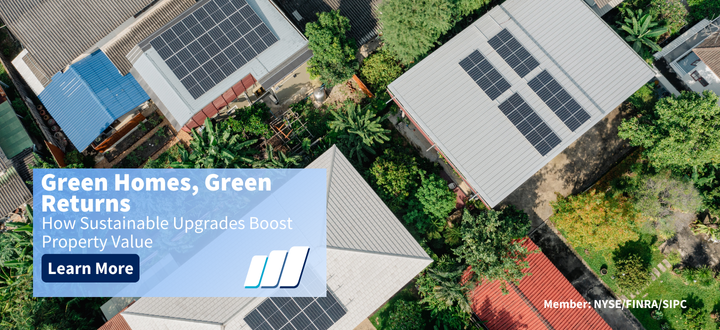
As we enter the Spring season, this is a time when home buying and selling activity traditionally ramps up in most areas of the country. There are a number of factors that have traditionally influenced housing activity and property values. These typically include the state of the economy, the level of interest rates and the supply of homes for sale in your area. Another variable that has come into play in recent years is the area of green homes and sustainability. We are increasingly seeing the value of many of these types of upgrades and improvements offering increased home values to homeowners. Solar Panels Solar panels are not cheap and can cost upwards of $20,000 to install. This needs to be balanced against the average homeowner who spends $100 or more each month for electricity. According to one estimate, the value of the average home will increase by $20 for every $1 in reductions to the home’s annual utility bills. For homeowners who plan to stay in their homes, they can likely recoup the cost of the solar panels over time when it comes time to sell. In the meantime, they will reap the benefits of lower utility costs while living in the home. In addition, they may be eligible for the federal solar tax credit as well as a credit offered by some states. Modern Appliances Upgrading to modern appliances can add value to your home in the eyes of potential buyers. Older appliances use more energy, more water and are generally more expensive to operate. In many cases, a home with upgraded, modern appliances can influence whether or not a buyer decides on your home or another home with a more modern kitchen and appliances if they feel the two homes are close in their minds. Many homeowners like fancy, stainless steel appliances. The fanciness, combined with the energy efficiency can, in some cases, be the item that swayed a potential buyer in favor of your home versus another option they may be considering. New Windows Installing new windows can make your home look more attractive to potential buyers and to passersby in general. Today’s better windows provide a better view to the outside; they provide natural light inside of the home; and they provide better insulation than most previous window versions. Today’s double or triple-paned windows hold up better against bad weather which seems to be more and more prevalent in some areas of the country. They let in sunlight, which, along with improved insulation, can help reduce overall energy costs. By some estimates, energy efficient windows can save up to $700 annually in energy costs and can offer a return on investment as high as 70% due to the resulting increase in the home’s value they can provide. Home Insulation The installation of improved, up-to-date home insulation can also improve the value of your home. Better insulation will generally cost the homeowner between $3,000 and $10,000. Good insulation can increase a home’s value by up to 6% according to some estimates. The higher the R-value of the insulation, the better job it can do regulating the inside temperature and reducing noise from the outside. Good insulation can reduce the heating costs in the winter and cooling costs in the summer. Low-Cost Upgrades There are some low-cost sustainable upgrades that homeowners can consider. Installing energy-efficient lighting will generally cost $250 or less and can provide potential annual savings of $200 on energy costs. A smart thermostat will generally cost $250 or less and can provide annual energy savings of around $100. Installing an EV charger will generally cost $2,500 or less. The potential savings can run around $1,000 annually, including an available tax credit. Additionally, the EV charger will appeal to eco conscious home buyers who might own an EV themselves. The Payoff There are two main payoffs in green, sustainability-oriented home upgrades. The first is for you as the homeowner while you are living in the home. You will realize energy savings and can benefit from any increase in the home’s value provided by these upgrades. The second is when you go to sell the home. A recent survey showed that about one-third of the realtors surveyed were promoting sustainable home features as a selling point for their listings where applicable, believing this to be a plus in the sales process. A survey also showed that the realtors surveyed saw increases ranging from 1% to 10% in the value of offers versus comparable homes without sustainable improvements. Looking to sell your home or to get a handle on where your home fits within your overall net worth? Reach out to your Wedbush financial advisor. They can help and will refer you to experts they work with as needed. Disclosure Securities and Investment Advisory services offered through Wedbush Securities, Inc. Member NYSE / FINRA / SIPC. Wedbush Securities does not provide tax or legal advice. Please consult your tax or legal advisor. These materials are provided for general information and educational purposes based upon publicly available information from sources believed to be reliable — we cannot assure the accuracy or completeness of these materials. The information presented is not intended to constitute an investment recommendation for, or advice to, any specific person. The information presented here is not specific to any individual’s personal circumstances. To the extent that this material concerns tax matters, it is not intended or written to be used, and cannot be used, by a taxpayer for the purpose of avoiding penalties that may be imposed by law. Each taxpayer should seek independent advice from a tax professional based on his or her individual circumstances. The information in these materials may change at any time and without notice.
Building Future Wealth: A Guide to Early Financial Literacy
Far too many teenagers graduate high school without a solid understanding of the basics of personal finance. In many cases, this is due to the lack of a financial education curriculum in their school. The average score on the 2022 National Financial Educators Council Literacy Test was 63.5%.. As this is a test administered to teenagers, this means that the average teen taking the test missed 36.5% of the questions. This and similar findings on teen financial literacy tell us that we need to improve in this area as a society to promote improved financial literacy going forward. What Are The Consequences of Low Rates of Financial Literacy? A 2018 study by FINRA showed that without adequate financial education, many people struggle with the management of their finances once they reach adulthood. The study found: 46% did not have enough savings to cover an emergency 48% of those with student loan debt were concerned about their ability to pay off this debt 51% were concerned about running out of money once they retire As you can see, the lack of a solid education in finance can have dire consequences once these students reach adulthood, which does not bode well for our society as a whole. Getting Started with Your Children Perhaps the best place to start improving financial literacy in our children is at home. Studies have shown that many basic financial habits can be instilled in children as early as age seven. Strategies to teach these good financial habits can be as basic as parents setting up a savings account for their child and having them save money they receive from gifts or other sources to buy things they want. Parents can also help to teach their children about personal finances by discussing these issues with them as they become age appropriate. Budgeting is a good example. Teach them that money is a finite commodity, and they need to budget what they spend in order to achieve their goals. This might be some sort of purchase or simply spending money to do things like go to the movies with their friends. This can be especially important as they reach their teenage years and begin to hold part-time jobs, or perhaps make money from cutting lawns or shoveling snow for neighbors. Financial Literacy Programs Can Help Learning about biology or algebra in school is important. What is probably more important is learning about the basics of personal finance. Schools need to teach financial literacy in order to be able to say they are producing well-rounded young adult graduates who are ready to enter society. As a parent, ask about what your local schools are doing in this area. If you feel it is not enough, be vocal with your school administrators to change this. Other Programs Beyond the schools, there are organizations around the country that offer programs to promote financial literacy among teens. One such example is Wisconsin-based Secure Futures. They are a nonprofit that brings financial education to teens in area high schools and community-based organizations throughout Wisconsin and in the Chicago area. They offer three main programs: Money Sense is a program geared towards high school juniors and seniors that introduces them to basic financial literacy concepts and practices. This program can be taught in a classroom setting or can be taken independently by the students. The hope is that by introducing these teens to these issues as they are starting to work, apply for college loans, open saving accounts and apply for credit cards that they will learn financial best practices as they embark on their financial journey. Money Path is a comprehensive web-based software tool geared to high school students that links academic, career planning and financial planning. This program can help launch these students on a course to achieve their career and financial goals, Money Coach is a program offered by the organization to mentor teens from under-resourced local areas with the coaching and guidance they need to help them develop good money habits that can hopefully help them as they move into adulthood and throughout their adult lives. These programs offered by Secure Futures are just examples of the types of programs that are needed to get our youth off and through school with a solid financial education. This financial education may be as or more important than anything they will learn in high school or in college. All the knowledge and earning power in the world is useless if you don’t know how to manage your money to achieve your lifestyle and financial goals. Are you looking for a solid partner to help you achieve your financial goals? Be sure to reach out to your local Wedbush financial advisor for expert guidance. Disclosure Securities and Investment Advisory services offered through Wedbush Securities, Inc. Member NYSE / FINRA / SIPC. Wedbush Securities does not provide tax or legal advice. Please consult your tax or legal advisor. These materials are provided for general information and educational purposes based upon publicly available information from sources believed to be reliable — we cannot assure the accuracy or completeness of these materials. The information presented is not intended to constitute an investment recommendation for, or advice to, any specific person. The information presented here is not specific to any individual’s personal circumstances. To the extent that this material concerns tax matters, it is not intended or written to be used, and cannot be used, by a taxpayer for the purpose of avoiding penalties that may be imposed by law. Each taxpayer should seek independent advice from a tax professional based on his or her individual circumstances. The information in these materials may change at any time and without notice.